5 Lies Anxiety Wants You To Believe
Have you ever noticed that anxiety always seems to tell the same story?
The details may change, and the circumstances may look different. But underneath the fear, worry, and racing thoughts are often the same lies repeated over and over again.
The enemy rarely needs new tactics when the old ones still work.
Jesus called Satan "the father of lies" (John 8:44), and one of his favorite strategies is to whisper false beliefs so often that we begin accepting them as truth. Over time, those lies shape the way we think, the way we see ourselves, and even the way we see God.
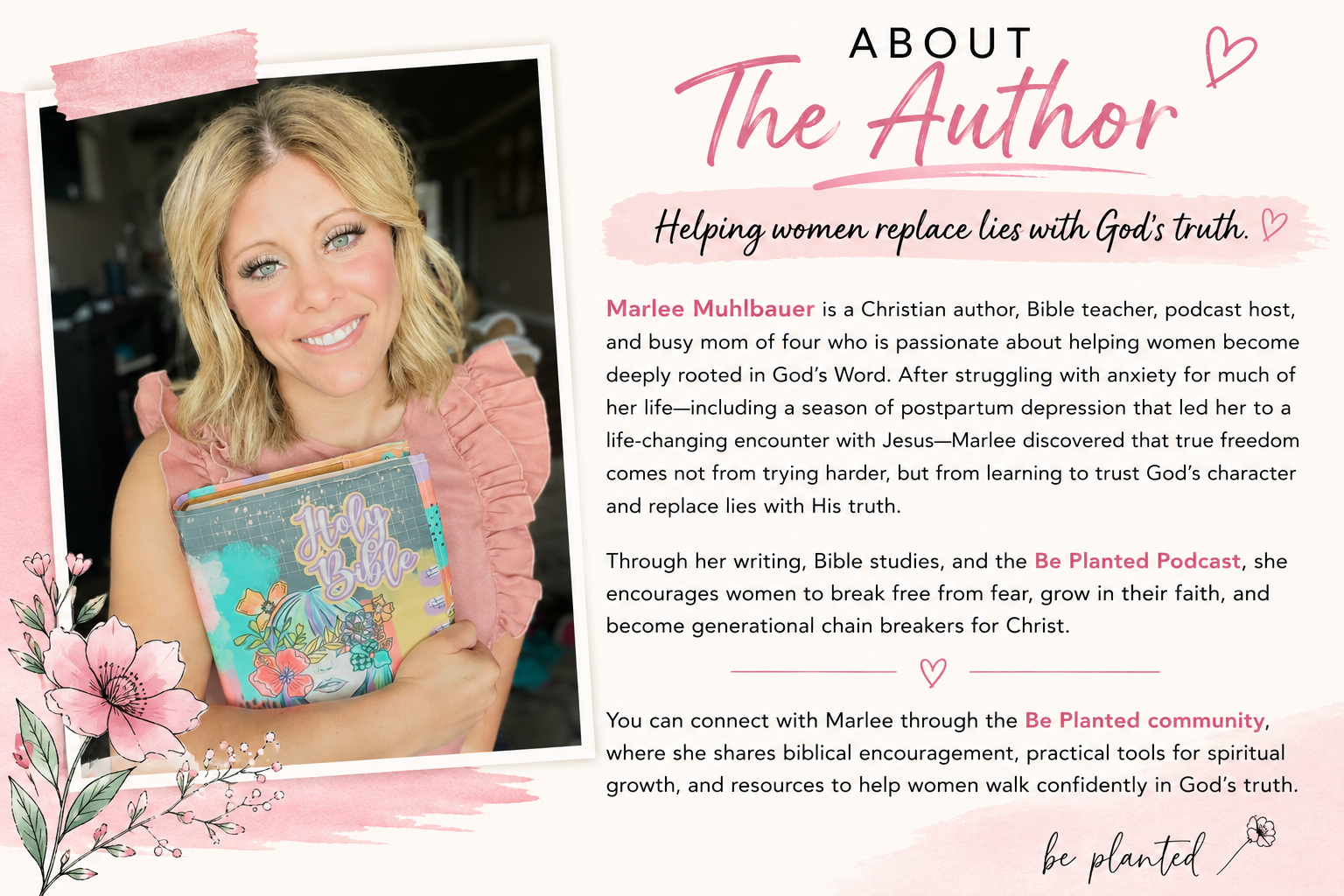
I know because I lived it.
For most of my life, anxiety felt like a constant companion. I believed the fearful thoughts in my mind were simply reality. I didn't realize that many of them were lies disguised as truth.
The good news is that every lie anxiety tells has a truth found in God's Word.
Let's uncover five of the most common lies anxiety wants Christian women to believe.
Lie #1: Something Bad Is About to Happen
This is one of anxiety's favorite lies. Even when everything seems to be going well, anxiety whispers that disaster is just around the corner. You finally experience a moment of peace, only to find yourself waiting for something bad to happen. You kiss your children goodbye and immediately imagine worst-case scenarios. You receive a blessing from God, and instead of enjoying it, you begin worrying about losing it. Anxiety has a way of turning God's gifts into opportunities for fear.
I know this lie well because I lived it for years. As a mom, I constantly felt responsible for protecting my children from every possible danger. I believed that if I worried enough, planned enough, or stayed alert enough, I could somehow keep them safe. But all that worrying never gave me peace—it only left me exhausted. Eventually, God showed me something that completely changed my perspective: my worrying wasn't protecting my children. God was.
The truth is that God's protection does not depend on our ability to anticipate every problem. He is watching over our children when they are at school, with friends, and even when they are completely out of our sight. Anxiety tells us that constant worry is a form of love, but real peace comes from trusting the One who loves our children even more than we do. When we release our grip of fear and place our families into God's hands, we can rest knowing that their lives have always been safest there.
God’s Truth:
God's truth speaks directly against this lie. Isaiah 41:10 says, "Fear not, for I am with you; be not dismayed, for I am your God." Notice that God doesn't promise a life free from uncertainty. Instead, He promises His presence in the middle of it. The reason we don't have to fear isn't that we know what tomorrow holds—it's because we know the One who holds tomorrow.
Anxiety wants us to believe that our future is fragile and completely dependent on our ability to control every outcome. But Scripture reminds us that our future is not in the hands of fear. It is in the hands of a faithful God. The same God who has carried you through every difficult season, provided for every need, and remained faithful through every trial is still in control today. When fear tries to convince you that something bad is about to happen, remember that God's plans for your life are not determined by your worries. They are guided by His wisdom, His love, and His sovereignty.
Trusting God doesn't mean you'll never feel afraid. It means choosing to believe that His presence is greater than your fear. When anxiety begins to whisper worst-case scenarios, let God's truth remind you that you are not facing the future alone. The Lord goes before you, walks beside you, and remains faithful through every season. Because of that, you can rest—not in your ability to control what might happen, but in God's ability to care for you no matter what happens.
Lie #2: You're Going to Mess This Up
This lie kept me stuck for years. I overthought decisions, second-guessed myself, and spent countless hours wondering if I was making the "right" choice. Sometimes I avoided stepping into opportunities altogether because I was afraid of getting it wrong. Whether it was motherhood, ministry, relationships, or pursuing the things God had placed on my heart, I often found fear of failure safer than taking a step forward. The pressure to do everything perfectly became exhausting.
But over time, God began showing me something freeing: He never asked me to be perfect. He asked me to trust Him. God is not looking for flawless performance from His children. He is looking for willing hearts that depend on Him. The truth is that God's plans are not so fragile that one imperfect decision can destroy them. His grace is bigger than our mistakes, and His guidance is stronger than our weaknesses.
When we place our faith in our own ability to get everything right, anxiety grows. But when we place our faith in God's ability to lead us, peace begins to take its place. We can move forward knowing that even when we stumble, God is faithful to direct our steps, redeem our mistakes, and accomplish His purposes in our lives. The goal isn't perfection—it's trust. And trusting God will always lead us farther than perfectionism ever could.
God's Truth:
God's truth speaks powerfully against the lie that He is disappointed in you. Romans 8:1 says, "There is therefore now no condemnation for those who are in Christ Jesus." That verse is more than a comforting thought—it is a promise. Because of Jesus' death and resurrection, believers no longer stand condemned before God. Our relationship with Him is not based on our performance, but on Christ's finished work on the cross.
One of the enemy's favorite tactics is to blur the line between conviction and shame. Conviction is the loving work of the Holy Spirit that gently reveals areas where we need to grow and draws us back into a closer relationship with God. Conviction says, "Come back to the Father." Shame, on the other hand, says, "Hide from Him." Conviction produces repentance and restoration, while shame produces fear, isolation, and discouragement.
I spent years believing that every struggle, every anxious thought, and every mistake somehow proved that God was frustrated with me. But the more I studied Scripture, the more I realized that God's response to His children is not rejection—it is grace. He is a loving Father who meets us in our weakness, not one who abandons us because of it.
If a thought is constantly accusing you, filling you with hopelessness, or pushing you away from God's presence, it is not coming from Him. God may correct His children, but He never condemns them. His voice invites us to come closer, not run away. When anxiety tells you that God is disappointed in you, remember the truth: because of Jesus, you are loved, accepted, forgiven, and welcomed into His presence. You don't have to earn His love—you already have it.
Lie #3: You're Not Enough
Anxiety loves comparison because comparison keeps our eyes focused on ourselves instead of on God. It has a way of pointing to everyone else's strengths while magnifying our weaknesses. We look around and see people who seem smarter, more talented, more successful, more confident, or more spiritually mature than we are. Before long, anxiety begins whispering lies: You're not smart enough. Not spiritual enough. Not talented enough. Not qualified enough. The more we listen to those thoughts, the more inadequate we begin to feel.
I know this struggle personally. For years, my dyslexia made me question whether I could ever write, teach, or share what God was placing on my heart. Every time I compared myself to someone who seemed to communicate effortlessly, anxiety would remind me of everything I lacked. I focused on my weaknesses instead of God's strength. I wondered why God would choose someone like me when there were so many people who appeared more gifted, more educated, and more qualified. Deep down, I believed that my limitations made me less useful to God and that my struggles somehow disqualified me from the calling He had placed on my life.
The longer I believed those lies, the smaller I played. I doubted myself, hesitated to step out in faith, and questioned whether I had anything valuable to offer. But over time, God began showing me that He had never been asking me to rely on my own abilities in the first place. He wasn't looking for perfection; He was looking for obedience. My dyslexia wasn't something He overlooked when He called me—it was something He already knew about. What I saw as a weakness, He saw as an opportunity to display His faithfulness. Looking back, I can see that my limitations never disqualified me from being used by God. If anything, they became evidence that the work He was doing through me was done by His power, not my own.
God’s Truth:
But God has a way of turning our weaknesses into places where His strength shines the brightest. Throughout Scripture, He consistently chose ordinary, flawed people to accomplish extraordinary things. Moses struggled with speaking. Gideon doubted himself. Peter made mistakes. Yet God used each of them powerfully because His plans were never dependent on their abilities alone.
2 Corinthians 12:9 says: "My grace is sufficient for you, for my power is made perfect in weakness."
The truth is that God doesn't call the qualified; He qualifies the called. He isn't looking for people who have it all together. He's looking for hearts that are willing to trust Him. When God places a calling on your life, He already knows your weaknesses, your fears, and your limitations. None of those things surprises Him. In fact, they often become the very places where His grace and power are most clearly displayed. When anxiety tells you that you're not enough, remember that God never asked you to be enough on your own. He simply asks you to be faithful and available. Your qualifications are not what determine your usefulness to God—His presence in your life is. The same God who calls you is the God who equips you, strengthens you, and walks with you every step of the way.
Lie #4: God Is Disappointed in You
This lie keeps so many women trapped in shame. Anxiety has a way of convincing us that every struggle is proof that we're failing God. Every bad day feels like evidence that we're not growing fast enough. Every mistake becomes proof that we're not good enough. Every fearful thought makes us question our faith, and every moment of weakness leaves us wondering if God is disappointed in us. Instead of seeing ourselves through the lens of grace, we begin measuring our worth by our performance.
The enemy loves this lie because shame creates distance between God and us. He wants us to believe that God is standing over us with frustration, keeping score of our failures and shaking His head in disappointment. He wants us to think that our struggles make us less lovable, less worthy, and less valuable in God's eyes. But that is not the heart of our Father. The God we see throughout Scripture is compassionate, patient, merciful, and abounding in steadfast love. He is not looking for reasons to reject His children; He is constantly inviting them closer.
When Jesus looks at His children, He does not see people defined by their failures. He sees those He died to redeem. He sees sons and daughters covered by His grace, purchased by His blood, and deeply loved by their Father. Jesus knew every weakness, every struggle, and every mistake you would ever make before He willingly went to the cross. Nothing about your current struggle surprises Him. Instead of turning away from you in disappointment, He moves toward you with compassion and mercy.
God’s Truth:
God's truth completely dismantles this lie. Romans 8:1 says, "There is therefore now no condemnation for those who are in Christ Jesus." What an incredible promise. Because of Jesus' sacrifice on the cross, believers no longer stand condemned before God. Our failures, mistakes, and shortcomings are not the lens through which God sees us. When we place our faith in Christ, we are covered by His righteousness and welcomed into a relationship with our Heavenly Father. This doesn't mean we will never struggle or make mistakes, but it does mean that our standing with God is secured by grace, not by our performance.
One of the most important things we can learn is the difference between conviction and shame. The Holy Spirit brings conviction because He loves us and desires to help us grow. Conviction gently points out areas that need to change and invites us closer to God. It says, "Come to the Father. He can help you with this." Shame, however, has a very different voice. Shame tells us we are failures. It tells us to hide, withdraw, and isolate ourselves from God because we are unworthy of His love. Conviction leads us toward God, while shame drives us away from Him.
This distinction is incredibly important when battling anxiety. Many women assume every negative thought about themselves must be true. They mistake shame for conviction and begin carrying burdens God never intended them to bear. But God does not use condemnation to motivate His children. He uses love, grace, and truth. His correction always comes with an invitation to return to Him, not a demand to run from Him.
If a thought is constantly accusing you, filling you with hopelessness, or pushing you away from God's presence, it isn't coming from Him. God's voice may challenge you, but it will never condemn you. His voice calls you beloved, forgiven, redeemed, and chosen. The next time anxiety tells you that you're too broken, too weak, or too much of a failure, remember Romans 8:1. There is no condemnation for those who are in Christ Jesus. Instead of hiding from God, run toward Him. His arms are open, His grace is sufficient, and His love for you has never changed.
Lie #5: This Feeling Will Never Go Away
This may be anxiety's most convincing lie. When you've struggled with anxious thoughts for years, it's easy to begin believing that you'll always struggle. When fear has been part of your story for decades, freedom can feel impossible. Anxiety doesn't just suggest that nothing will change—it tries to convince you that change is impossible. It tells you that this is simply who you are. That anxiety is woven into your personality, your future, and your identity. It whispers that you've tried before, prayed before, hoped before, and still found yourself battling the same fears, so why expect anything different now?
The longer a struggle lasts, the stronger this lie can seem. It can begin to feel less like a thought and more like a fact. Anxiety creates the illusion that it has permanent authority over your life. It points to your past as evidence and uses your present struggles to predict your future. It tells you that because you've been anxious for so long, you'll always be anxious. It wants you to believe that freedom is for other people but not for you.
God’s truth:
God's truth says something entirely different.
God never defines us by our struggles. He defines us by His love, His grace, and His power at work within us. Anxiety says, "You'll never change." God says He is continually transforming us. Anxiety says, "This is who you are." God says your identity is found in Christ, not in your fears. Anxiety says, "You'll always be stuck." God says that what seems impossible with man is possible with Him. The lie of anxiety focuses on your limitations, while God's truth points to His limitless power.
I remember seasons where I wondered if anxiety would ever loosen its grip on my life. There were times when it felt like fear had wrapped itself around every part of my thinking. I felt discouraged because I wasn't seeing the instant transformation I wanted. I thought freedom would come all at once, but instead God took me through a process. He taught me that healing is often gradual. It happens one surrendered thought at a time. One prayer at a time. One act of trust at a time. One truth replacing one lie at a time.
Looking back, I can see that God was working even when I couldn't see immediate results. Every time I chose to open my Bible instead of spiraling into fear, He was renewing my mind. Every time I surrendered a worry to Him, He was teaching me to trust. Every time I replaced an anxious thought with Scripture, He was building new patterns of faith. The changes were small at first, almost unnoticeable, but over time they began to add up. What once felt impossible slowly became reality as God faithfully worked beneath the surface.
That's how God often works. He grows us day by day, not all at once. The same God who plants a seed and patiently grows it into a flourishing tree is patient with our healing, too. While anxiety demands immediate proof that things are changing, God invites us to trust Him even when growth is happening slowly. His work is not measured by how we feel in a moment but by His faithfulness over time.
If anxiety has convinced you that you'll never change, don't believe the lie. The hold anxiety seems to have on your life is not greater than God's power to heal, restore, and transform. Freedom may not happen overnight, but God is still working. Every step you take toward Him matters. Every prayer matters. Every truth matters. And with God's help, what feels impossible today can become part of your testimony tomorrow.
How to Fight Back Against Anxiety's Lies
The enemy's goal is not simply to make you afraid. Fear is often just the doorway. His real goal is to make you believe things that are not true about God, yourself, and your circumstances. If he can convince you that God isn't trustworthy, that you're not enough, that something bad is always about to happen, or that you'll never change, then he doesn't have to keep fighting for your attention—you'll begin repeating those lies to yourself. Over time, those lies can become so familiar that they start sounding like your own thoughts.
That's why freedom begins with identifying the lie. We cannot replace something we haven't recognized. Many women spend years trying to fight anxiety without ever stopping to ask what anxiety is actually saying. When fear begins to rise, pause and ask yourself: What am I believing right now? Does this thought agree with Scripture? What does God say instead? Those simple questions can expose lies that have quietly shaped your thinking for years. Anxiety thrives in the dark, but truth brings everything into the light.
The battle against anxiety is not won by trying harder to stop worrying. It is won by learning to replace lies with truth. Every time you identify a lie and intentionally replace it with God's Word, you weaken fear's hold on your life. Every time you choose truth over panic, you strengthen your faith. Every time you surrender control and trust God with the outcome, you create space for His peace to take root in your heart. Transformation happens one thought at a time, as God renews your mind through His truth.
Practical Action Steps for Success
1. Capture the Thought.
When anxiety shows up, don't immediately accept the thought as truth. Write it down. Ask yourself, What exactly am I afraid of right now? Often, seeing the thought on paper helps expose how much of it is based on fear rather than fact.
2. Compare It to Scripture.
Take the anxious thought and measure it against God's Word. If the thought says, "I'm all alone," compare it to Hebrews 13:5, where God promises never to leave or forsake you. If it doesn't agree with Scripture, it doesn't deserve a permanent place in your mind.
3. Replace the Lie with Truth.
Don't stop at identifying the lie. Replace it with a specific biblical truth. Create a list of verses that address your most common anxious thoughts and return to them often.
4. Pray the Truth Back to God.
Turn Scripture into prayer. Instead of praying only about your fears, pray God's promises. Thank Him for who He is and remind yourself of what He has said.
5. Repeat the Process Daily.
Renewing your mind is not a one-time event. It's a daily practice. The lies that were repeated for years are often replaced through years of faithfully returning to God's truth. Don't get discouraged if growth feels slow. Consistency matters more than perfection.
Remember, freedom is rarely found in one giant breakthrough. More often, it is found in thousands of small decisions to believe God over fear. Every lie you replace with truth is another step toward freedom. Every anxious thought surrendered to God is another opportunity for peace. And every day you choose to trust Him, you are becoming more rooted in His truth and less controlled by fear.
Final Encouragement
Friend, anxiety is a liar. It lies about your future, convincing you that something bad is always waiting around the corner. It lies about your identity, telling you that your struggles define who you are. It lies about your worth, making you believe that you are not enough, not capable enough, or not valuable enough. Perhaps most dangerously, it lies about God's character, whispering that He is distant, disappointed, or unwilling to help. The longer we listen to those lies, the more convincing they can become.
But no matter how loud anxiety's voice may be, God's truth is stronger than every lie you've believed. His Word reminds you that you are loved, chosen, forgiven, and secure in Christ. It reminds you that God is faithful, trustworthy, and present in every circumstance. You do not have to spend the rest of your life listening to anxiety's voice. Through God's Word, you can learn to recognize the lies, replace them with truth, and walk in the freedom Christ purchased for you on the cross.
The voice of anxiety may be loud, but the voice of God is true. Anxiety speaks from fear, but God speaks from faithfulness. Anxiety focuses on what could go wrong, while God reminds us of what is eternally true. When fear and truth compete for our attention, truth always has the final word. As you continue choosing God's truth day after day, you'll discover that anxiety's grip begins to loosen, your faith begins to grow, and the peace of Christ begins to take deeper root in your heart. Because in the end, truth doesn't just challenge the lie—it overcomes it. And truth always wins.
Ready to Replace Lies with Truth?
This faith-filled book will help you uncover the lies that keep anxiety alive and replace them with the life-changing truth of God's Word.
✨ Pre-order your copy today and receive a FREE bonus gift: The Lies Anxiety Tells 5-Day Bible Study Workbook.
This exclusive workbook is the perfect companion to the book and will help you begin identifying anxious thoughts, renewing your mind with Scripture, and walking in God's peace before your book even arrives.
Book releases in just 3 weeks!
Pre-order today and start your journey toward lasting peace, one truth at a time.